Wearing Gemstone Rings in Islam: A Personal Spiritual Experience
لبس خواتم الأحجار الكريمة في الإسلام: تجربة روحية شخصية
اختلفت نظرة العلماء والتقاليد الروحية الإسلامية إلى لبس خواتم الأحجار الكريمة. فقد حذّر بعض العلماء من الاعتقاد بأن للأحجار قوى خارقة مستقلة، بينما عُرفت الأحجار الكريمة منذ زمن طويل بوصفها من مخلوقات الله الجميلة والثمينة.
بالنسبة لي، لا يتعلق لبس الحجر الكريم بالاعتقاد بأن للحجر قوة مستقلة. بل أراه مخلوقًا جميلًا وثمينًا من خلق الله. إن ندرته ولونه وتكوينه الطبيعي وجماله تذكّرني بعظمة الخالق وإبداعه.
قيمة الحجر الكريم
تأتي قيمة الحجر الكريم من الخصائص التي خلقها الله فيه، مثل الندرة والجمال واللون والتكوين الطبيعي. وعندما نرتدي حجرًا كريمًا، يمكننا أن نُقدّر جمال الخلق دون أن نعتقد أن الحجر نفسه يتحكم في مصائرنا أو يمنح البركة بصورة مستقلة.
وهناك جوانب كثيرة من خلق الله لا تستطيع حواسنا العادية إدراكها. وهذا يذكّرنا بأن العالم أوسع بكثير مما نراه بأعيننا ونفهمه بحواسنا.
وقد يشعر بعض الناس عند ارتداء حجر معين بالهدوء أو الثقة أو الإيجابية أو الوعي الروحي. ويمكن أن تكون هذه التجارب ذات معنى بالنسبة لهم، ولكن ينبغي أن تبقى في إطار التجربة الشخصية، لا أن تُقدّم على أنها آثار خارقة مضمونة للجميع.
تجربتي الروحية الشخصية
يشعر بعض الأشخاص بحالة نفسية أو روحية مختلفة عند ارتداء حجر معين، وخاصة عندما يجمعون ذلك مع الدعاء وذكر الله أو إهداء الثواب باسم شخصية روحية يجلّونها.
وبالنسبة لي، فقد شعرت شخصيًا بحالة مختلفة عندما أهديت الثواب باسم الإمام جعفر بن محمد الصادق (رضي الله عنه) وأنا أرتدي حجرًا كريمًا. وفي بعض الأحيان أشعر براحة أكبر وإيجابية وتركيز وارتباط روحي.
وأصف ذلك بأنه تجربة روحية شخصية، وليس قاعدة دينية يجب أن يشعر بها كل إنسان بالطريقة نفسها.
وما يصفه بعض الناس بأنه “ذبذبة إيجابية” يمكن فهمه أيضًا باعتباره حالة داخلية من الهدوء والأمل والذكر والشكر والشعور بالقرب من الله.
أحجار كريمة ورد ذكرها في روايات منسوبة إلى الإمام جعفر الصادق (رضي الله عنه)
توجد في بعض المصادر الإسلامية التقليدية روايات منسوبة إلى الإمام جعفر بن محمد الصادق (رضي الله عنه) تتحدث عن أحجار كريمة مختلفة وفضائلها. وقد تختلف درجة صحة هذه الروايات وتفسيرها، ولذلك لا ينبغي التعامل مع كل رواية على أنها حكم ديني ثابت ومتفق عليه.
ومن الأحجار التي يكثر ذكرها في هذه التقاليد: العقيق، والفيروز، والياقوت.
العقيق — ʿAqīq
العقيق / Carnelian أو Agate
العقيق من أكثر الأحجار التي ارتبطت بالروايات التقليدية المنسوبة إلى الإمام جعفر الصادق (رضي الله عنه).
وقد ارتبط لبس خاتم العقيق في بعض التقاليد الإسلامية بالبركة والمعاني الروحية. وبالنسبة لكثير من الناس، يمكن أن يصبح خاتم العقيق تذكيرًا بالصلاة والذكر والتواضع والشكر والقرب من الله.
ولا ينبغي فهم الحجر نفسه على أنه مصدر مستقل للقوة الإلهية، فكل خير وبركة إنما هي من الله.
الفيروز — Fīrūza
Turquoise
الفيروز من الأحجار الأخرى التي ورد ذكرها في بعض الروايات التقليدية المنسوبة إلى الإمام جعفر الصادق (رضي الله عنه).
وترتبط بعض الروايات التقليدية بالفيروز بالبركة والحماية من الفقر. وينبغي فهم هذه الروايات في سياقها التاريخي والروحي، لا باعتبارها ضمانًا للرزق أو الثراء.
وبالنسبة للمؤمن، يمكن أن يكون المعنى الأعمق هو التذكير بأن الرزق في النهاية بيد الله.
الياقوت — Yāqūt
Ruby
كما ورد ذكر الياقوت في بعض الكتابات الإسلامية التقليدية المتعلقة بالأحجار الكريمة.
وقد ارتبط في بعض التقاليد بالشرف والقيمة والبركة والازدهار. وهذه أيضًا تُفهم باعتبارها ارتباطات تقليدية، وليست ادعاءً بأن الحجر ينتج هذه النتائج بصورة مستقلة.
فالحجر الكريم جزء من خلق الله، والله وحده هو المصدر النهائي للنفع والبركة.
عندما يصبح الحجر الكريم وسيلة للتذكّر
عندما أرتدي حجرًا كريمًا وأهدي الثواب باسم الإمام جعفر الصادق (رضي الله عنه)، أشعر أحيانًا بتغير واضح في حالتي الداخلية.
قد أشعر براحة أكبر أو إيجابية أو تركيز أو ارتباط روحي. وقد أشعر وكأنني انتقلت إلى حالة داخلية أكثر إيجابية.
وأفهم ذلك على أنه تجربة روحية شخصية.
ولا أقول إن كل شخص سيشعر بالشعور نفسه، ولا أعتقد أن للحجر قوة إلهية مستقلة.
بالنسبة لي، يصبح الحجر وسيلة للتذكّر؛ فهو شيء مادي يذكّرني بالله، ويجعلني أتأمل في خلقه، وأمارس الشكر، وأسعى إلى المحافظة على صفاء القلب وإيجابيته.
النية مهمة
النية التي يحملها الإنسان عند ارتداء الخاتم مهمة جدًا.
فمن يرتدي حجرًا كريمًا لأنه جميل وثمين وله قيمة ثقافية أو لأنه يذكّره بخلق الله، يختلف عن شخص يعتقد أن الحجر نفسه يمتلك قوة إلهية.
الحجر مخلوق.
والله هو الخالق.
قد يصبح الحجر وسيلة للتذكّر، لكن اعتماد القلب النهائي يجب أن يبقى على الله.
قد تختلف التجربة من شخص إلى آخر
التجارب الروحية شخصية جدًا.
قد يشعر شخص بالهدوء عند ارتداء العقيق، وقد يفضّل شخص آخر الفيروز، بينما قد يستمتع شخص آخر بجمال الياقوت وندرته فقط.
ولا حاجة إلى تحويل التجربة الشخصية إلى قاعدة دينية عامة.
يمكن للحجر الكريم أن يذكّرنا بالصلاة وذكر الله وتقدير جمال الخلق والشكر والمحافظة على قلب إيجابي.
والأهم هو أن يبقى القلب متعلّقًا بالله وألا يصبح الإنسان معتمدًا على شيء من مخلوقاته.
تأمل أخير
ربما لا يكون الحجر الكريم نفسه هو الذي يغيّرنا.
وربما يكون التغيير مرتبطًا بالمعنى والذكر والنية والتأمل الروحي الذي نربطه به.
عندما أرتدي حجرًا كريمًا، أرى شيئًا جميلًا من خلق الله. وعندما أهدي الثواب باسم الإمام جعفر الصادق (رضي الله عنه)، أشعر شخصيًا بحالة داخلية مختلفة، وأحيانًا أشعر براحة وإيجابية ووعي روحي أكبر.
ولكن في النهاية، فإن مصدر الهداية والسلام والبركة والنفع هو الله وحده.
الحجر الكريم يمكن أن يكون جميلًا.
يمكن أن يكون ثمينًا.
يمكن أن يصبح وسيلة للتذكّر.
ولكن يجب أن يبقى القلب دائمًا متصلًا بالخالق.
الله هو الخالق، ومصدر كل نعمة، وإليه يكون اعتمادنا في النهاية.
Wearing Gemstone Rings in Islam: A Personal Spiritual Experience
Wearing gemstone rings has been viewed differently by Islamic scholars and spiritual traditions. Some scholars have cautioned against believing that stones possess independent supernatural powers, while gemstones have also had a long history of being worn as beautiful and valuable creations of Allah.
For me, wearing a gemstone is not about believing that the stone has independent power. I see it as a beautiful creation of Allah. Its rarity, colour, natural formation, and beauty remind me of the greatness and creativity of the Creator.
The Value of a Gemstone
A precious stone has value because Allah has created it with qualities that make it rare, beautiful, and desirable. When we wear such a stone, we can appreciate the beauty of creation without believing that the stone itself controls our destiny, provides blessings independently, or possesses divine power.
There are also many aspects of creation that human beings cannot perceive with their ordinary senses. This reminds us that the world is greater than what we can see and understand through our physical senses.
For some people, wearing a particular gemstone may be associated with feelings of peace, confidence, positivity, or spiritual awareness. Such experiences can be meaningful, but they should be understood as personal experiences rather than presented as guaranteed supernatural effects.
My Personal Spiritual Experience
Some people experience a particular state of mind when wearing a gemstone, especially when they combine it with prayer, remembrance of Allah, or a hadiya dedicated in the name of a revered spiritual figure.
For example, I have personally experienced a different inner state when making a hadiya in the name of Imam Jaʿfar ibn Muhammad al-Sadiq (RA) while wearing a gemstone. At times, I feel greater peace, positivity, remembrance, and spiritual connection.
I describe this as a personal spiritual experience, rather than as a religious rule that everyone must experience in the same way.
What some people describe as a “positive vibration” can also be understood as an inner spiritual state—a feeling of calmness, hope, remembrance, gratitude, and closeness to Allah.
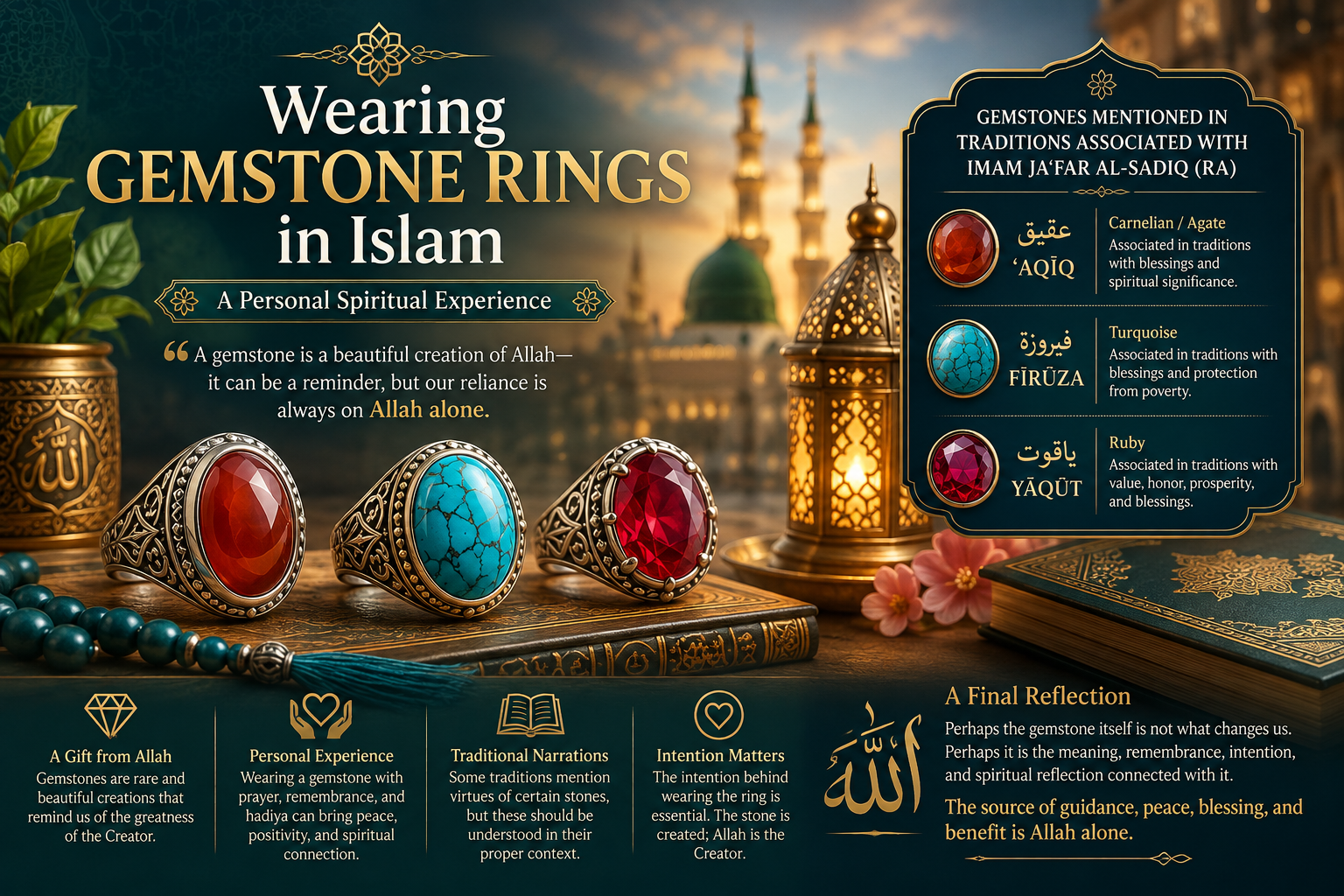
Gemstones Mentioned in Traditions Associated With Imam Jaʿfar al-Sadiq (RA)
Traditional Islamic literature contains reports attributed to Imam Jaʿfar ibn Muhammad al-Sadiq (RA) concerning different gemstones and their virtues. The authenticity and interpretation of individual reports can vary, so these traditions should not automatically be treated as universally established religious teachings.
Among the gemstones frequently mentioned in such traditions are ʿAqīq, Fīrūza, and Yāqūt.
ʿAqīq — عقيق
Carnelian / Agate
ʿAqīq is one of the gemstones most commonly associated with traditional reports attributed to Imam Jaʿfar al-Sadiq (RA).
Historically, wearing an ʿAqīq ring has been associated with spiritual significance and blessings in Islamic traditions. For many people, an ʿAqīq ring can also serve as a reminder of prayer, remembrance, humility, gratitude, and closeness to Allah.
The stone itself should not be understood as an independent source of divine power. Any blessing or benefit ultimately comes from Allah.
Fīrūza — فيروزة
Turquoise
Turquoise, known as Fīrūza, is another gemstone mentioned in traditional narrations attributed to Imam Jaʿfar al-Sadiq (RA).
Some traditional reports associate Fīrūza with blessings and protection from poverty. Such traditions should be understood within their historical and spiritual context rather than as a guarantee of material prosperity.
For a believer, the deeper reminder can be that provision ultimately comes from Allah.
Yāqūt — ياقوت
Ruby
Ruby, or Yāqūt, is also mentioned in traditional Islamic writings concerning precious stones.
In some traditional accounts, it has been associated with honour, value, blessings, and prosperity. Once again, these should be understood as traditional associations rather than a claim that the stone independently produces such results.
A gemstone is part of Allah’s creation, while Allah alone is the ultimate source of benefit and blessing.
When a Gemstone Becomes a Spiritual Reminder
When I wear a gemstone and make a hadiya in the name of Imam Jaʿfar al-Sadiq (RA), I sometimes feel a noticeable difference within myself.
I may feel more peaceful, positive, focused, or spiritually connected. It can feel as though I have entered a more positive inner state.
I understand this as a personal spiritual experience.
I do not claim that everyone will experience the same feeling, nor do I believe that the gemstone possesses independent divine power.
For me, the gemstone becomes a medium of remembrance—a physical reminder to think about Allah, appreciate His creation, practice gratitude, and cultivate a positive state of heart.
The Intention Is Important
The intention behind wearing a ring matters greatly.
If someone wears a gemstone because it is beautiful, valuable, culturally meaningful, or a reminder of Allah’s creation, that is different from believing that the stone itself possesses divine power.
The stone is created.
Allah is the Creator.
A gemstone may become a reminder, but our ultimate reliance should remain upon Allah.
Different People May Experience It Differently
Spiritual experiences are deeply personal.
One person may feel calm when wearing ʿAqīq. Another may appreciate turquoise. Someone else may simply enjoy the beauty and rarity of a ruby.
There is no need to turn a personal experience into a universal religious rule.
A gemstone can remind us to pray, remember Allah, appreciate creation, practice gratitude, and maintain a positive heart.
The important thing is to keep the heart connected to Allah rather than becoming dependent upon an object.
A Final Reflection
Perhaps the gemstone itself is not what changes us.
Perhaps it is the meaning, remembrance, intention, and spiritual reflection connected with it.
When I wear a gemstone, I see something beautiful created by Allah. When I make a hadiya in the name of Imam Jaʿfar al-Sadiq (RA), I personally experience a different inner feeling—sometimes greater peace, positivity, and spiritual awareness.
But ultimately, the source of guidance, peace, blessing, and benefit is Allah alone.
A gemstone can be beautiful.
A gemstone can be valuable.
A gemstone can become a reminder.
But the heart should always remain connected to the Creator.
Allah is the Creator, the source of every blessing, and the One upon whom we ultimately rely.