Simplify Marriage: Make It Easy, Blessed and Affordable
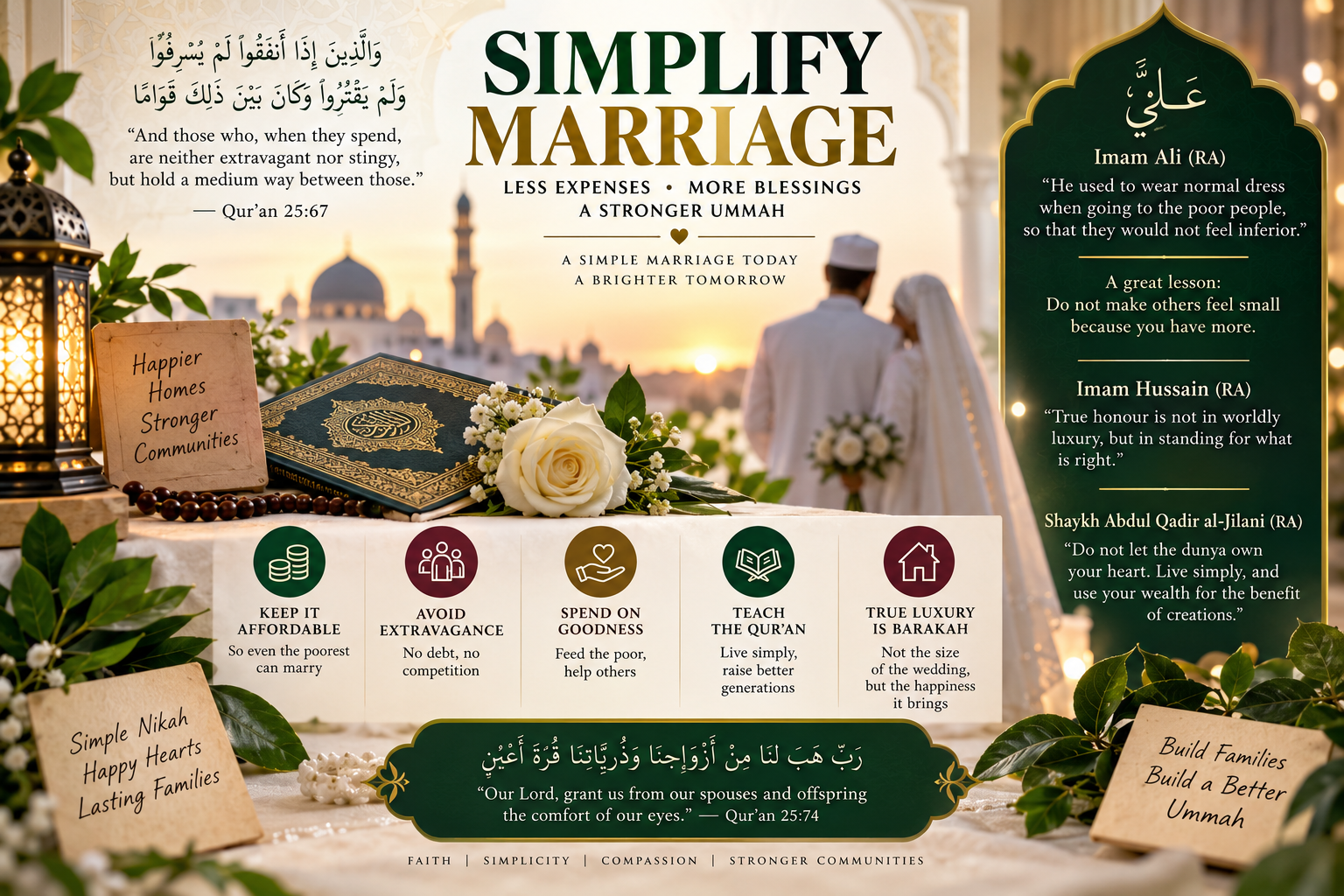
تبسيط الزواج: اجعلوه سهلاً، مباركاً، ومتاحاً للجميع
الزواج في الإسلام ليس مسابقة في المظاهر والترف، وإنما هو ميثاق ومسؤولية ورحمة ومودة. ولذلك ينبغي ألا يتحول يوم الزواج إلى سبب للديون والضغوط المالية والتنافس الاجتماعي.
يمكن للإنسان أن يفرح، وأن يكرم ضيوفه، وأن يلبس لباساً جميلاً، ولكن من غير إسراف ولا تبذير.
قال الله تعالى:
﴿وَالَّذِينَ إِذَا أَنفَقُوا لَمْ يُسْرِفُوا وَلَمْ يَقْتُرُوا وَكَانَ بَيْنَ ذَٰلِكَ قَوَامًا﴾
الفرقان: 67
اجعلوا الزواج في متناول الفقير
من أجمل ما يمكن أن تفعله المجتمعات المسلمة أن تجعل الزواج ممكناً حتى لمن لا يملك المال الكثير.
- عقد نكاح بسيط.
- طعام طيب بلا إسراف.
- ملابس جميلة ومناسبة دون مبالغة.
- اجتماع عائلي محترم.
- عدم إجبار الأهل على الاقتراض.
- عدم جعل الزواج منافسة بين العائلات.
لا ينبغي أن يشعر الفقير بالخجل لأنه لا يستطيع إقامة حفل فاخر. كرامة الإنسان ليست في سعر ثوبه ولا في حجم قاعة زفافه.
إن كنت تريد أن تنفق، فأنفق في الخير
إذا وسّع الله على الإنسان في الرزق، فليس العيب أن ينفق من ماله في الحلال. ولكن الأجمل أن يسأل نفسه: أين يمكن أن يصبح هذا المال سبباً في الخير؟
بدلاً من إنفاق مبالغ ضخمة على الزينة التي تزول بعد ساعات، يمكن أن يُطعم الفقراء، أو يساعد شاباً على الزواج، أو يكفل يتيماً، أو يساهم في تعليم القرآن، أو يساعد أسرة محتاجة.
ويمكن للإنسان أن يجعل صدقته لله تعالى، ويدعو الله أن يجعل ثوابها رحمة وخيراً، مع محبته وتوقيره للصالحين من أهل البيت والعلماء، ومنهم الإمام علي والإمام الحسين والشيخ عبد القادر الجيلاني رحمهم الله.
درس من تواضع الإمام علي
من الدروس العظيمة التي نتعلمها من سيرة الإمام علي رضي الله عنه: التواضع، ومراعاة أحوال الناس، والقرب من الفقراء والمحتاجين.
والدرس الذي ينبغي أن نفهمه اليوم هو أن الإنسان الذي يملك المال أو المكانة لا ينبغي أن يجعل الفقير يشعر بأنه أقل قيمة منه.
فإذا دخل الغني على الناس بملابس ومظاهر باهظة جداً، فقد يشعر الفقير بالخجل من حاله. أما التواضع فيجعل الناس يشعرون بالكرامة والاحترام.
لا تجعل نعمتك سبباً في إحراج إنسان آخر.
ماذا نتعلم من الإمام الحسين؟
عندما نتذكر الإمام الحسين رضي الله عنه، نتذكر الشجاعة والصبر والتضحية والثبات على الحق.
وتعلمنا واقعة كربلاء أن قيمة الإنسان ليست في كثرة ما يملك من متاع الدنيا.
ولهذا ينبغي أن نسأل أنفسنا بعد انتهاء حفل الزواج: ماذا بقي؟
الزينة ستُزال، والطعام سيؤكل، والملابس قد تُلبس مرة واحدة، والصور ستصبح ذكريات.
لكن حسن الخلق يبقى، والصلاة تبقى، والرحمة بين الزوجين تبقى، وتربية الأبناء تبقى، والصدقة تبقى.
الشيخ عبد القادر الجيلاني والزهد
يُذكر الشيخ عبد القادر الجيلاني رحمه الله في التراث الإسلامي بالتأكيد على الإخلاص والتقوى والزهد وعدم التعلق بالدنيا.
والزهد لا يعني بالضرورة أن يمتلك الإنسان لا شيء، وإنما يعني ألا تمتلك الدنيا قلب الإنسان.
يمكنك أن تملك المال دون كِبر، وأن تلبس لباساً جميلاً دون إسراف، وأن تعيش في بيت واسع دون احتقار الفقراء.
السؤال ليس فقط: كم أستطيع أن أنفق؟
بل السؤال الأهم: لماذا أنفق؟
علّموا أبناءكم القرآن والبساطة
القرآن ليس كتاباً نقرأه فقط، بل هو منهج نتعلم منه كيف نعيش.
علّموا أبناءكم القرآن والصلاة والصدق والرحمة والكرم واحترام الوالدين ومساعدة الفقراء.
وعلموهم أن قيمة الإنسان ليست في هاتفه أو سيارته أو ملابسه أو حفله.
علّموهم أن البيت البسيط يمكن أن يكون مليئاً بالسعادة، وأن الطعام البسيط يمكن أن يكون فيه بركة، وأن الزواج البسيط يمكن أن يكون من أجمل الزيجات.
لا تجعلوا بداية الزواج بداية الديون
ينبغي أن يبدأ الزوجان حياتهما وهما يفكران في بناء الأسرة، وليس في كيفية سداد ديون حفل الزواج.
إذا بدأت الأسرة الجديدة بمدخرات بدلاً من الديون، أصبح بإمكانها أن تبني بيتها، وتساعد والديها، وتتعامل مع الظروف الطارئة، وتربي أبناءها، وتنفق في سبيل الله.
الفخامة الحقيقية هي البركة
ربما ينبغي أن نعيد تعريف معنى الزواج الفاخر.
الزواج الفاخر حقاً هو الزواج الذي لا يُفقر الوالدين، ولا يرهق العريس، ولا يحرج الفقير، ولا يهدر الطعام، ويُكرم الضيف، ويتذكر المحتاج، ويبدأ بالنية الصالحة والدعاء.
الفخامة الحقيقية ليست في كثرة الإنفاق، وإنما في البركة.
رسالة أخيرة
أيها الأغنياء: أنفقوا، ولكن أنفقوا في الخير.
أيها الآباء والأمهات: يسّروا الزواج على أبنائكم.
أيها الشباب: لا تجعلوا كلام الناس أهم من رضا الله.
أيها الفقراء: لا تخجلوا من الزواج البسيط؛ كرامتكم ليست في المظاهر.
يا مجتمعات المسلمين: لا تجعلوا معيار نجاح الزواج حجم الحفل، بل اجعلوا المعيار حسن الأخلاق والرحمة والاستقرار والتقوى.
نسأل الله أن ييسر الزواج للشباب والشابات، وأن يبارك في البيوت، وأن يرزق المحتاجين، وأن يجعل أموالنا عوناً على الخير، وأن يعلمنا أن نستخدم نعم الدنيا دون أن نصبح عبيداً لها. آمين.
Marriage in Islam is not a competition of appearances and luxury. It is a covenant of responsibility, mercy and affection. Therefore, the wedding day should not become a cause of debt, financial pressure or social competition.
A person can celebrate, honour guests and wear beautiful clothes, but without extravagance and waste.
Allah says:
“And those who, when they spend, are neither extravagant nor stingy, but hold a medium way between those.”
Qur’an 25:67
Make Marriage Affordable for the Poor
One of the most beautiful things a Muslim community can do is make marriage possible even for someone who does not have much money.
- A simple nikah.
- Good food without waste.
- Beautiful and appropriate clothing without excess.
- A respectable family gathering.
- No pressure on parents to borrow money.
- No competition between families.
A poor person should never feel ashamed because they cannot afford a luxurious wedding. Human dignity is not measured by the price of someone’s clothes or the size of their wedding hall.
If You Want to Spend, Spend on Goodness
If Allah has given someone wealth, there is nothing wrong with spending it in halal ways. But a person should also ask: Where can this money become a source of good?
Instead of spending enormous amounts on decorations that disappear within hours, some of that wealth could feed poor families, help a young couple marry, support an orphan, contribute to Qur’an education or assist a struggling family.
A person may give charity sincerely for Allah and make dua that Allah brings goodness and reward through it, while remembering and honouring righteous figures such as Imam Ali, Imam Hussain and Shaykh Abdul Qadir al-Jilani, may Allah have mercy upon them.
The Lesson of Humility from Imam Ali
Among the important lessons associated with the life of Imam Ali (RA) are humility, consideration for people’s circumstances and closeness to the poor and vulnerable.
The lesson for us today is that a person who has wealth or status should never make a poor person feel inferior.
If a wealthy person enters a gathering surrounded by extremely expensive clothing and displays of luxury, a poor person may feel embarrassed about their own circumstances. Humility, on the other hand, allows everyone to feel respected and valued.
Do not allow your blessings to become a reason for another person to feel ashamed.
What Can We Learn from Imam Hussain?
When we remember Imam Hussain (RA), we remember courage, patience, sacrifice and standing for what is right.
The events of Karbala remind us that a person’s worth is not determined by how much worldly wealth they possess.
So after the wedding celebration is over, we should ask: What remains?
The decorations will be removed. The food will be eaten. The clothes may be worn only once. The photographs will eventually become memories.
But good character remains. Prayer remains. Mercy between husband and wife remains. Raising children remains. Charity remains.
Shaykh Abdul Qadir al-Jilani and Zuhd
Shaykh Abdul Qadir al-Jilani (RA) is remembered in Islamic tradition for emphasizing sincerity, piety, spiritual discipline and freedom from excessive attachment to worldly life.
Zuhd does not necessarily mean owning nothing. Rather, it means that the world does not own your heart.
You can have wealth without arrogance. You can wear good clothes without extravagance. You can live in a comfortable home without looking down on the poor.
The question is not simply: “How much can I spend?”
The more important question is: “Why am I spending it?”
Teach Your Children the Qur’an and Simplicity
The Qur’an is not merely a book that we recite. It is a guide that teaches us how to live.
Teach your children the Qur’an, prayer, honesty, mercy, generosity, respect for parents and care for the poor.
Teach them that a person’s value does not come from their phone, car, clothes or wedding.
Teach them that a simple home can be full of happiness, simple food can contain blessing, and a simple marriage can be one of the most beautiful marriages.
Do Not Turn the Beginning of Marriage into the Beginning of Debt
A young couple should begin married life thinking about building a family, not about how they will repay wedding debts.
If a new family begins with savings rather than unnecessary debt, they can build their home, support their parents, prepare for children, handle emergencies and give charity.
True Luxury Is Barakah
Perhaps we need to redefine what a “luxurious wedding” really means.
A truly luxurious marriage is one that does not financially destroy the parents, does not burden the groom, does not embarrass the poor, does not waste food, honours guests, remembers those in need and begins with sincere intention and dua.
True luxury is not excessive spending. True luxury is barakah.
A Final Message
To the wealthy: Spend, but spend on goodness.
To parents: Make marriage easy for your children.
To young people: Do not make people’s opinions more important than Allah’s pleasure.
To those with limited means: Never be ashamed of a simple wedding. Your dignity is not measured by appearances.
To Muslim communities: Do not measure the success of a marriage by the size of the wedding. Measure it by character, mercy, stability and faith.
May Allah make marriage easy for young men and women, bless our homes, provide for those in need, make our wealth a means of goodness, and teach us to use the blessings of this world without becoming slaves to them. Ameen.
الإسلام دين يدعو إلى الخير والصلاح في المجتمع، ويشجع على الإنفاق في المكان الصحيح والوقت الصحيح. فليس المقصود أن نمنع الناس من الفرح أو الإنفاق، وإنما أن نضع المال في موضعه النافع؛ فالزواج يُيسَّر ولا يُعسَّر، والمناسبات الطيبة تُقام بفرح وشكر دون إسراف، والمال يمكن أن يُستثمر في الأعمال الحلال، والتعليم، ومساعدة الفقراء، وبناء مجتمع أقوى. الإسلام لا يحارب النجاح والثراء، بل يعلّمنا أن نستخدم النعمة بمسؤولية، وأن يكون إنفاقنا سبباً في الخير والنفع للناس.
Islam is a religion that promotes goodness and the well-being of society, and it teaches us to spend our wealth in the right place and on the right occasions. The goal is not to prevent people from celebrating or spending, but to direct wealth toward meaningful benefit. Marriage should be made easy, good occasions can be celebrated with happiness and gratitude without extravagance, and wealth can be invested in halal businesses, education, helping the poor and building a stronger community. Islam does not oppose success or wealth; it teaches us to use our blessings responsibly and make our spending a source of goodness and benefit for others.