Musical Instruments in Different Sufi Orders
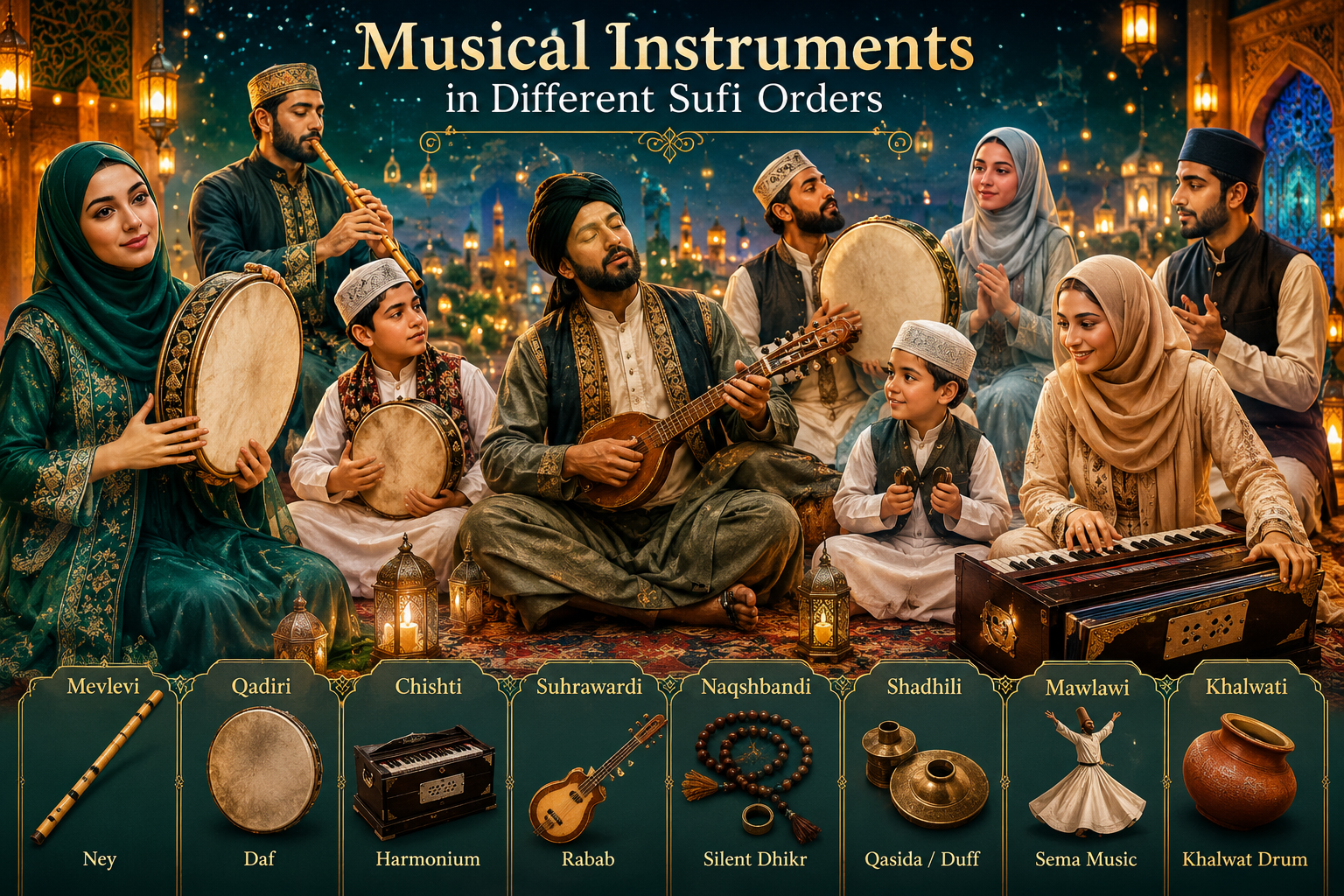
Musical Instruments in Different Sufi Orders
الآلات الموسيقية في الطرق الصوفية المختلفة
النسخة العربية
تختلف الطرق الصوفية في موقفها من الموسيقى (السماع) واستخدام الآلات الموسيقية. لا يوجد حكم موحد. إليك ملخص لأهم الطرق:
١. الطريقة الجشتية (الچشتية)
- مرتبطة بقوة بالسماع والقوالي، خاصة في شبه القارة الهندية.
- الآلات الشائعة: الطبلة، الدولك، الهارمونيوم، السيتار، السارانجي، الناي، الدف.
- وضع الشيوخ الأوائل شروطاً صارمة (مغنون ذكور بالغون، كلمات طاهرة، نية خالصة). بعض الأقوال نهت عن الآلات الوترية مثل الچنگ والرباب، لكن الممارسة اللاحقة أصبحت أكثر انفتاحاً.
٢. الطريقة المولوية (دراويش الدوران)
- الموسيقى أساسية في حفل الدوران (الآيين).
- الآلات الرئيسية: الناي (الأكثر قدسية)، الكُدُوم (طبول صغيرة)، الرباب، الطنبور، البندير.
٣. الطريقة النقشبندية
- الأكثر تحفظاً عموماً.
- تفضل الذكر الخفي أو الهادئ. عادةً ما تُتجنب الآلات الموسيقية أو تُقيد بشدة.
٤. الطريقة القادرية
- تختلف حسب الفرع والمنطقة.
- بعض الفروع تستخدم الدف والآلات الإيقاعية، بينما تنهى فروع أخرى عن السماع الموسيقي.
نصيحة روحية مهمة
إذا كنت تستخدم الموسيقى والآلات كمسلم، فتذكر هذه النقاط الأساسية:
- حاول تقليل الأطعمة غير النباتية – النظام الغذائي الخفيف يساعد على ليونة القلب وصفاء الذهن.
- لا تتناول المخدرات أبداً – أي مُسكر يُدمر الصفاء والإخلاص اللازمين للسماع الروحي الحقيقي.
- قدّر الحق دائماً – تكلم بالصدق، واعمل بالصدق، واجعل نيتك خالصة. الموسيقى بلا صدق القلب فارغة.
الموسيقى مجرد وسيلة. الهدف الحقيقي هو قلبٌ نقي متجهٌ إلى الله.
English Version
Sufi orders (tariqas) differ in their views on music (samaʿ) and the use of musical instruments. There is no single uniform rule. Below is a summary of the main orders:
1. Chishtiyya (Chishti Order)
- Strongly associated with samaʿ and Qawwali, especially in South Asia.
- Common instruments in practice: Tabla, Dholak, Harmonium, Sitar, Sarangi, Ney, Daff/Dafli.
- Early masters set strict conditions (adult male singers, pure lyrics, pure intention). Some statements discouraged stringed instruments like chang and rabab, but later practice became more open.
2. Mevleviyya (Mevlevi / Whirling Dervishes)
- Music is central to the whirling ceremony (āyīn).
- Main instruments: Ney (reed flute – the most sacred), Kudüm (small kettledrums), Rebab, Tanbur, Bendir.
3. Naqshbandiyya
- Generally the most cautious order.
- Prefers silent or quiet dhikr. Musical instruments are usually avoided or strongly restricted.
4. Qadiriyya
- Varies by branch and region.
- Some branches use frame drums (daff) and percussion; others discourage musical samaʿ.
Important Spiritual Advice
If you use music and instruments as a Muslim, remember these essential points:
- Try to reduce non-vegetarian foods – a lighter diet helps keep the heart soft and the mind clear.
- Never ever take drugs – any intoxicant destroys the clarity and sincerity needed for true spiritual listening.
- Always value the truth – speak truthfully, act truthfully, and keep your intention pure. Music without truth of the heart is empty.
Music is only a means. The real goal is a purified heart turned toward Allah.