Does Islam Teach Us to Ignore or Abandon a Son or Daughter Because They Are Poor?
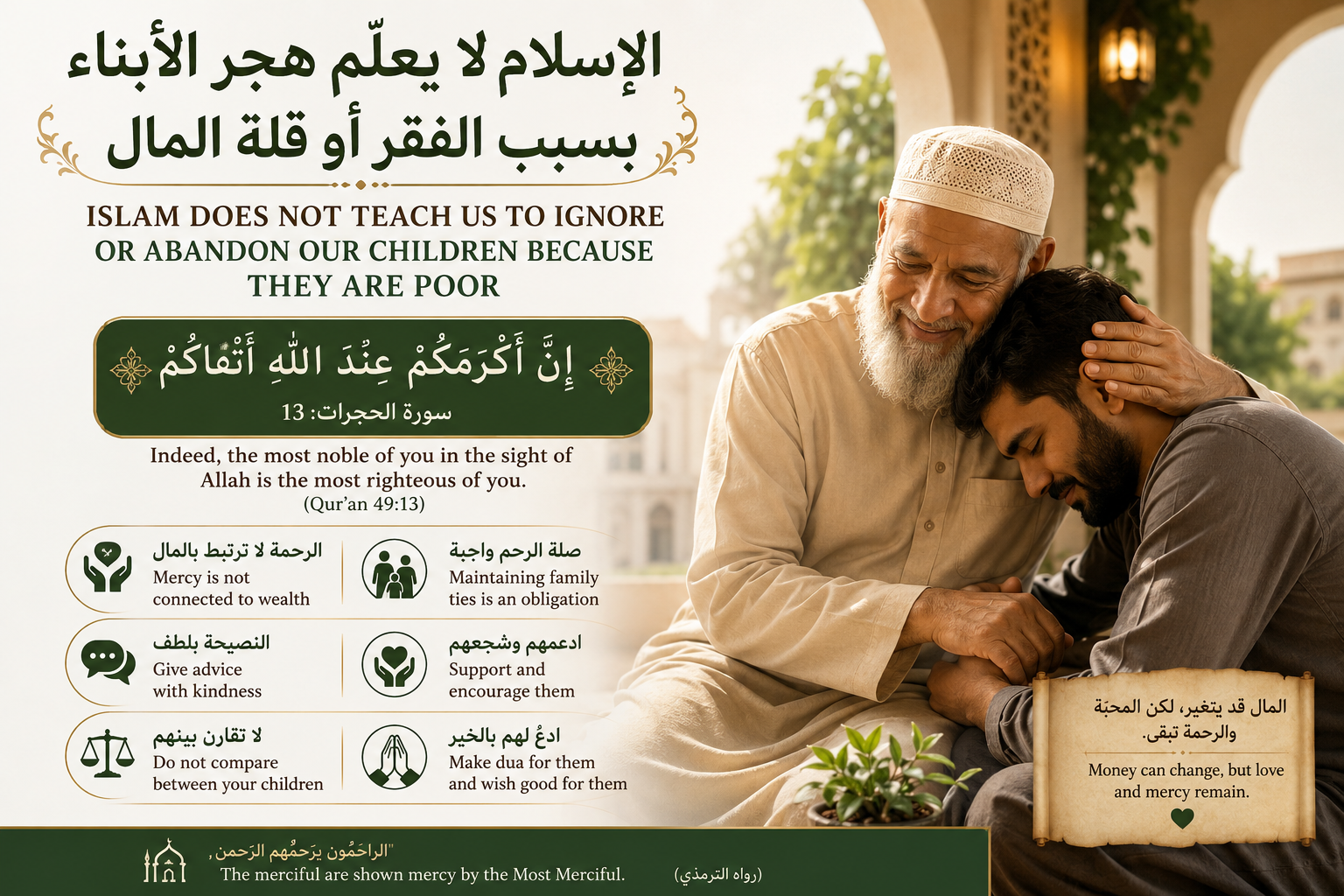
هل يُعلِّم الإسلام هجر الابن أو الابنة بسبب الفقر؟
لا، الإسلام لا يعلّم الوالدين أن يهجروا أبناءهم أو يتجاهلوهم أو يحتقروهم بسبب قلة المال. الإسلام دين الرحمة والعدل وصلة الرحم، ولا يجعل قيمة الإنسان مرتبطة بثروته أو راتبه أو مكانته المادية.
No. Islam does not teach parents to abandon, ignore, or look down on their son or daughter because they have little or no money. Islam teaches mercy, justice, maintaining family ties, and treating people with dignity. A person’s value is not determined by their wealth, salary, house, or financial status.
١. المال ليس مقياساً لقيمة الإنسان عند الله
1. Wealth Is Not the Measure of a Person’s Worth Before Allah
قال الله تعالى:
﴿إِنَّ أَكْرَمَكُمْ عِندَ اللَّهِ أَتْقَاكُمْ﴾
سورة الحجرات: ١٣
Allah says:
“Indeed, the most noble of you in the sight of Allah is the most righteous of you.”
Qur’an 49:13
فالكرامة عند الله لا تُقاس بكثرة المال، وإنما بالتقوى والإيمان والعمل الصالح وحسن الأخلاق.
Honor in the sight of Allah is not measured by how much money a person has. It is connected to righteousness, faith, good deeds, and good character.
٢. الفقر ليس عيباً ولا ذنباً
2. Poverty Is Not a Sin or a Disgrace
قد يمر الإنسان بمرحلة من الفقر أو البطالة أو ضيق الرزق. وقد يكون ذلك بسبب فقدان العمل، أو فشل مشروع، أو ظروف الحياة، أو أسباب أخرى.
A person may go through a period of poverty, unemployment, or financial hardship. This may happen because of losing a job, a failed business, difficult circumstances, or many other reasons.
قال الله تعالى:
﴿اللَّهُ يَبْسُطُ الرِّزْقَ لِمَن يَشَاءُ وَيَقَدِرُ﴾
سورة الرعد: ٢٦
Allah says:
“Allah extends provision for whom He wills and restricts it.”
Qur’an 13:26
لذلك لا ينبغي للوالدين أن ينظروا إلى ابنهم الفقير على أنه أقل قيمة من إخوته الأغنياء.
Therefore, parents should not regard a financially struggling child as less valuable than a wealthy brother or sister.
٣. صلة الرحم واجبة ومهمة في الإسلام
3. Maintaining Family Ties Is Important in Islam
حث الإسلام على صلة الرحم، وحذّر من قطع العلاقات الأسرية بسبب المال أو الخلافات أو المصالح الدنيوية.
Islam strongly encourages maintaining family relationships and warns against cutting family ties because of money, disagreements, or worldly interests.
قال رسول الله ﷺ: «مَنْ كَانَ يُؤْمِنُ بِاللَّهِ وَالْيَوْمِ الْآخِرِ فَلْيَصِلْ رَحِمَهُ»
رواه البخاري
The Prophet ﷺ said: “Whoever believes in Allah and the Last Day, let him maintain his ties of kinship.”
Reported by al-Bukhari.
فإذا كان الابن فقيراً، فليس فقره سبباً مشروعاً لقطيعة الرحم أو إهانته أو طرده من الأسرة.
If a son or daughter is poor, poverty is not a valid reason to sever family ties, humiliate them, or treat them as though they no longer belong to the family.
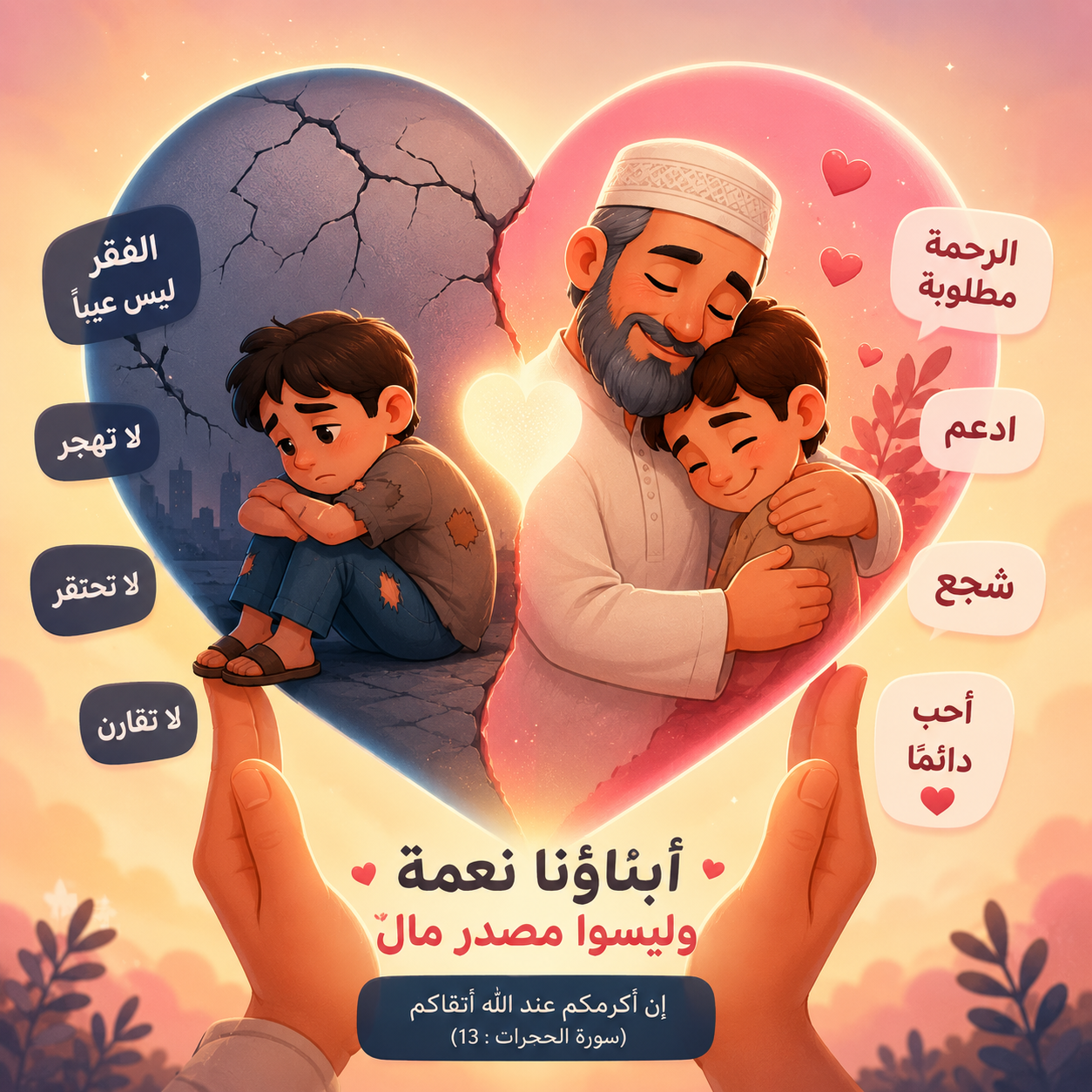
٤. الرحمة مطلوبة مع الأبناء
4. Mercy Is Required Toward Children
الإسلام دين الرحمة. وقد كان النبي ﷺ رحيماً بالأطفال وأهل بيته، وعلّم المسلمين أن الرحمة من أعظم الأخلاق.
Islam is a religion of mercy. The Prophet ﷺ showed mercy toward children and his family and taught Muslims that mercy is one of the greatest qualities.
«الرَّاحِمُونَ يَرْحَمُهُمُ الرَّحْمَنُ»
رواه الترمذي
“The merciful are shown mercy by the Most Merciful.”
Reported by al-Tirmidhi.
فكيف يليق بالمسلم أن يحرم ابنه من الرحمة والمحبة لمجرد أنه لا يملك المال؟
How, then, can a Muslim deprive their own child of mercy and affection simply because that child does not have money?
٥. لا يجوز احتقار الفقير أو السخرية منه
5. A Poor Person Should Not Be Humiliated or Mocked
نهى الله تعالى عن السخرية من الناس واحتقارهم، فقد يكون الشخص الذي نحتقره أفضل عند الله منا.
﴿يَا أَيُّهَا الَّذِينَ آمَنُوا لَا يَسْخَرْ قَوْمٌ مِّن قَوْمٍ عَسَىٰ أَن يَكُونُوا خَيْرًا مِّنْهُمْ﴾
سورة الحجرات: ١١
Allah forbids believers from mocking others, because the person being looked down upon may actually be better in the sight of Allah.
“O believers, let not one people ridicule another; perhaps they may be better than them.”
Qur’an 49:11
فلا يجوز أن يقول الوالد لابنه: أنت فقير، ولذلك أنت أقل من إخوتك.
A parent should therefore not tell a child, “You are poor, so you are less important than your brothers or sisters.”
٦. الفرق بين عدم القدرة على المساعدة ورفض المسؤولية
6. There Is a Difference Between Being Unable to Help and Refusing Responsibility
من المهم التفريق بين شخص لا يستطيع مساعدة والديه مالياً، وشخص يستطيع ولكنه يرفض عمداً القيام بواجباته.
It is important to distinguish between someone who genuinely cannot financially support their parents and someone who has the ability but deliberately refuses their responsibilities.
فإذا كان الابن لا يملك المال، فلا ينبغي معاملته وكأنه عاق أو عديم المسؤولية لمجرد فقره.
If a son or daughter genuinely has no money, they should not automatically be treated as disobedient or irresponsible simply because they are poor.
أما إذا كان الشخص قادراً على العمل ويترك المسؤوليات عمداً، فيمكن للوالدين نصحه وتوجيهه ووضع حدود مناسبة، ولكن دون ظلم أو إهانة.
If someone is capable of working but deliberately avoids their responsibilities, parents may advise them, encourage them to become responsible, and establish reasonable boundaries—but this should still be done without injustice or humiliation.
٧. لا تقارنوا بين الأبناء بسبب المال
7. Do Not Compare Children Based on Wealth
من الأخطاء المؤذية أن يقول الوالدان لابنهما الفقير:
«انظر إلى أخيك، فهو غني وناجح، أما أنت فلا تملك شيئاً.»
One of the most harmful things parents can do is tell a financially struggling child:
“Look at your brother. He is wealthy and successful, while you have nothing.”
هذه المقارنات قد تجرح قلب الابن وتسبب الحقد والغيرة وتؤدي إلى تفكك الأسرة.
Such comparisons can deeply hurt a child, create resentment and jealousy, and eventually damage the entire family relationship.
٨. يمكن للوالدين أن ينصحوا أبناءهم دون أن يهجروهم
8. Parents Can Give Advice Without Abandoning Their Children
إذا كان الابن لا يعمل أو يحتاج إلى تحسين وضعه المالي، فمن حق الوالدين أن ينصحاه ويشجعاه على العمل والكسب الحلال.
If a son or daughter is unemployed or needs to improve their financial situation, parents can advise and encourage them to work and earn halal income.
لكن هناك فرق كبير بين النصيحة وبين الهجر والإهانة.
But there is a major difference between giving advice and abandoning or humiliating someone.
يمكن للوالد أن يقول: «نحن نحبك، ولكن عليك أن تجتهد وتسعى لتحمل مسؤولياتك.»
A parent can say: “We love you, but you need to make an effort and work toward fulfilling your responsibilities.”
وهذا أفضل بكثير من قول: «ليس لك مكان عندنا لأنك لا تملك المال.»
This is very different from saying: “You have no place with us because you have no money.”
٩. المال لا ينبغي أن يكون شرطاً للمحبة
9. Money Should Not Become the Price of Love
الأبناء ليسوا مجرد مصدر للمال. الابن يبقى ابناً، والبنت تبقى ابنة، سواء كانا غنيين أو فقيرين.
Children are not merely sources of money. A son remains a son, and a daughter remains a daughter, whether they are wealthy or struggling financially.
قد يستطيع أحد الأبناء مساعدة والديه بمبالغ كبيرة، بينما لا يستطيع الآخر إلا القليل. وهذا لا يعني أن أحدهما أكثر حباً أو قيمة من الآخر.
One child may be able to support their parents with large amounts of money, while another may only be able to give a small amount. That does not automatically mean one child is more loving or more valuable than the other.
١٠. ماذا يفعل الابن إذا تجاهله أهله بسبب الفقر؟
10. What Should a Child Do If Their Family Ignores Them Because They Are Poor?
إذا كان الشخص يمر بضيق مالي، فعليه أن يسعى إلى تحسين وضعه بالحلال، وأن يعمل بما يستطيع، وأن يتعلم ويطور مهاراته، وأن يحافظ على كرامته وتقواه.
If someone is experiencing financial hardship, they should make a sincere effort to improve their situation through halal means, work according to their ability, learn, develop their skills, and maintain their dignity and faith.
وفي الوقت نفسه، لا ينبغي له أن يعتقد أن فقره يجعله عديم القيمة عند الله.
At the same time, they should never believe that poverty makes them worthless in the sight of Allah.
يمكنه أن يحافظ على احترام والديه، وأن يتجنب الإساءة إليهما، وأن يحاول إصلاح العلاقة، مع وضع حدود مناسبة إذا كان يتعرض للإهانة أو الأذى المستمر.
They can continue to respect their parents, avoid responding with abuse, and try to repair the relationship, while also establishing appropriate boundaries if they are repeatedly subjected to humiliation or harmful treatment.
١١. ماذا يفعل الوالدان مع الابن الفقير؟
11. What Should Parents Do With a Financially Struggling Child?
الأفضل أن يجمع الوالدان بين الرحمة والتوجيه. فلا يشجعان الكسل، وفي الوقت نفسه لا يهينان الابن بسبب فقره.
The best approach is for parents to combine mercy with guidance. They should not encourage laziness, but they should also never humiliate their child because of poverty.
- تشجيعه على العمل والكسب الحلال.
- مساعدته عند الحاجة بحسب القدرة.
- عدم مقارنته بإخوته.
- عدم إهانته أمام الأقارب.
- الدعاء له وتشجيعه.
- تعليمه المسؤولية وإدارة المال.
- الحفاظ على صلة الرحم والمحبة.
- Encourage them to work and earn halal income.
- Help them when genuinely needed and according to the family’s ability.
- Do not compare them with their siblings.
- Do not humiliate them in front of relatives.
- Make dua for them and encourage them.
- Teach responsibility and financial management.
- Maintain family ties and affection.
١٢. الخلاصة
12. Conclusion
الإسلام لا يعلّم الوالدين أن يهجروا أبناءهم أو يتجاهلوهم لأنهم فقراء أو لا يملكون المال. بل يدعو الإسلام إلى الرحمة والعدل وصلة الرحم وحفظ كرامة الإنسان.
Islam does not teach parents to abandon or ignore their children because they are poor or have no money. Rather, Islam teaches mercy, justice, maintaining family ties, and protecting human dignity.
المال قد يتغير. فقد يكون الإنسان فقيراً اليوم وغنياً غداً، وقد يكون غنياً اليوم وفقيراً غداً. أما التقوى والأخلاق والعمل الصالح فهي التي ينبغي أن تكون أساس تقييم الإنسان.
Money can change. A person may be poor today and wealthy tomorrow, or wealthy today and struggling tomorrow. What should matter most is righteousness, character, and good deeds.
﴿إِنَّ أَكْرَمَكُمْ عِندَ اللَّهِ أَتْقَاكُمْ﴾
“Indeed, the most noble of you in the sight of Allah is the most righteous of you.”
Qur’an 49:13
لذلك لا تجعلوا المال سبباً لقطع المحبة بين الوالدين والأبناء. علّموا أبناءكم المسؤولية، وشجعوهم على العمل، وساعدوهم عند الحاجة، ولكن لا تجعلوا الفقر سبباً لإهانتهم أو التخلي عنهم.
Therefore, do not allow money to destroy the love between parents and children. Teach children responsibility, encourage them to work, help them when they genuinely need it, but never make poverty a reason to humiliate or abandon them.
رسالة أخيرة
A Final Reminder
قد ينسى الناس راتبك، وسيارتك، وبيتك، وثروتك، ولكن أثر الكلمة الطيبة والرحمة في قلب ابن أو ابنة قد يبقى طوال العمر.
People may forget your salary, your car, your house, and your wealth. But the impact of a kind word and mercy shown to a son or daughter can remain in their heart for a lifetime.
فلا تجعلوا المال معيار الحب، ولا تجعلوا الفقر سبباً لقطع الرحم.
Do not make money the measure of love, and do not make poverty a reason to sever family ties.