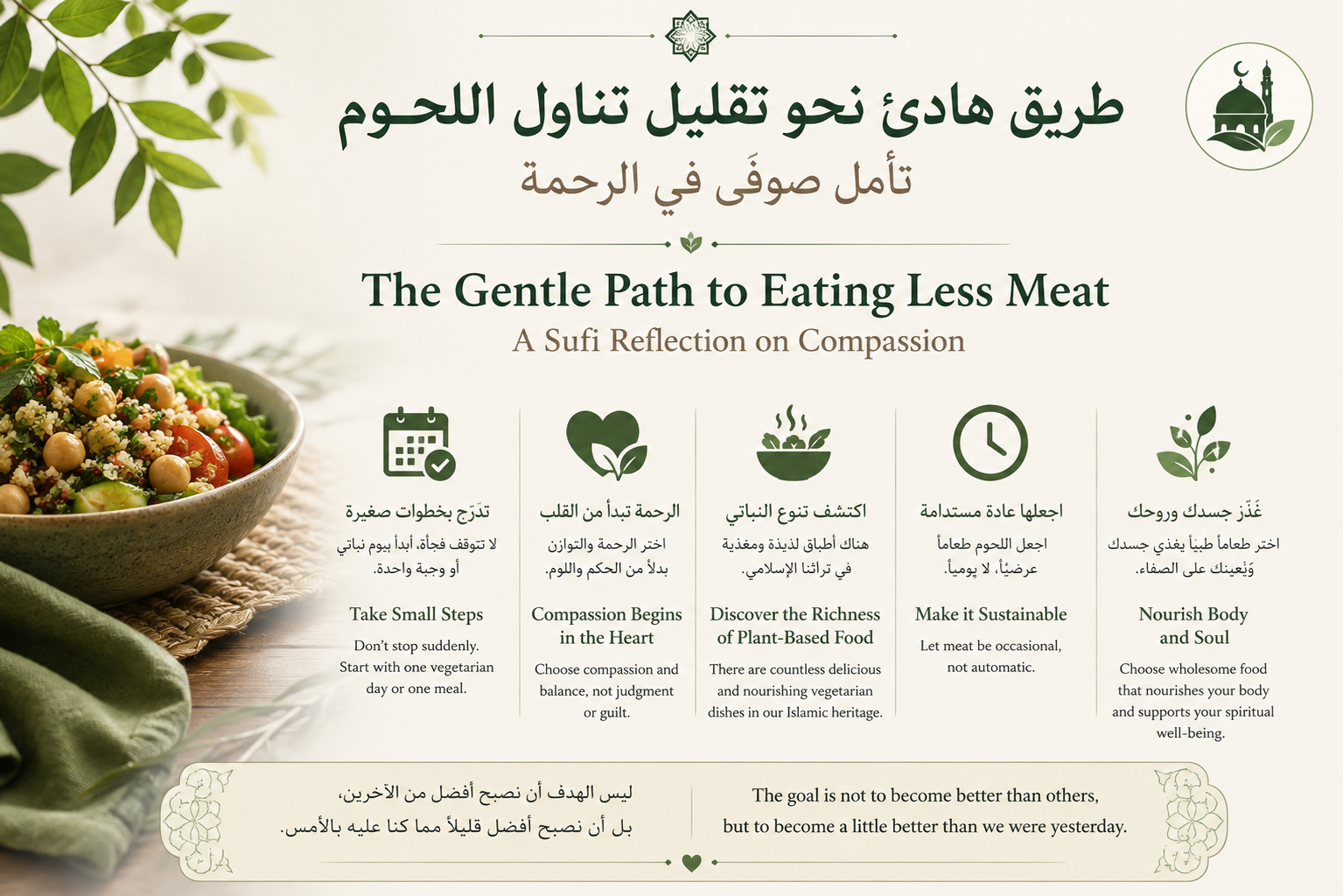
طريق هادئ نحو تقليل تناول اللحوم — تأمل صوفي في الرحمة
بالنسبة لكثير من الناس، ليس من السهل التوقف عن تناول اللحوم بشكل كامل.
فاللحوم قد تكون جزءًا من عادات الأسرة، والمناسبات، والضيافة، والوجبات اليومية.
ومن اعتاد تناولها منذ طفولته قد يجد أن التحول المفاجئ إلى النظام النباتي أمر صعب جدًا.
لكن ربما لا نحتاج إلى أن نبدأ بقول:
«لن آكل اللحوم مرة أخرى.»
يمكن أن نبدأ بشيء أبسط:
«سأحاول اليوم أن آكل كمية أقل.»
التغيير رحلة وليس قرارًا مفاجئًا
في كثير من التقاليد الصوفية، يُنظر إلى التغيير الروحي باعتباره رحلة تدريجية.
فالقلب لا يتغير دائمًا بالضغط والإجبار، وإنما ينمو من خلال الوعي والانضباط والرحمة والممارسة المستمرة.
ويمكن أن ننظر إلى علاقتنا بالطعام بالطريقة نفسها.
إذا كان شخص ما يتناول اللحوم كل يوم، فقد يكون التوقف المفاجئ أمرًا صعبًا.
لذلك يمكنه أن يبدأ بيوم أو يومين نباتيين في الأسبوع.
- الأسبوع الأول: يوم واحد دون لحوم.
- الأسبوع الثاني: يومان دون لحوم.
- الأسبوع الثالث: إضافة وجبات نباتية أكثر خلال الأسبوع.
- مع مرور الوقت: تصبح اللحوم طعامًا عرضيًا بدلًا من كونها جزءًا أساسيًا من كل وجبة.
لا حاجة إلى تحويل الأمر إلى منافسة.
الهدف هو بناء علاقة أكثر وعيًا واعتدالًا مع الطعام.
الرحمة تبدأ من القلب
تولي التقاليد الصوفية أهمية كبيرة للرحمة والتواضع وتهذيب النفس وتنقية القلب.
ويمكن النظر إلى تقليل تناول اللحوم من هذا المنظور، لا بهدف الحكم على من يأكل اللحوم،
وإنما كنوع من التدريب الشخصي على الرحمة وضبط النفس.
بدل أن نقول:
«من يأكل اللحوم شخص سيئ.»
يمكننا أن نسأل أنفسنا:
«هل أستطيع أن أعيش باستهلاك أقل؟»
هذا السؤال أكثر أهمية.
فالإنسان الذي يقلل استهلاكه من اللحوم دون أن يحتقر الآخرين قد يكون يمارس نوعًا هادئًا من الانضباط الداخلي.
لا تحتاج إلى أن تصبح نباتيًا بين ليلة وضحاها
من أكثر الأخطاء شيوعًا عند تغيير النظام الغذائي محاولة تغيير كل شيء دفعة واحدة.
إذا كانت وجبتك المعتادة تحتوي على اللحوم والأرز والخضروات وغيرها،
فلا تحتاج إلى إعادة بناء حياتك الغذائية بالكامل ابتداءً من الغد.
ابدأ باستبدال وجبة واحدة.
- برياني بالخضروات
- العدس
- الحمص
- الفاصولياء
- الأرز مع الخضروات
- الحساء النباتي
- أطباق الباذنجان والخضروات
- المكسرات والبقوليات
- أطباق الحبوب والخضروات التقليدية
ومع مرور الوقت، قد يكتشف الإنسان أن
الوجبة المشبعة لا تحتاج بالضرورة إلى اللحوم.
اكتشف غنى الطعام النباتي من حولك
الطعام النباتي ليس شيئًا غريبًا عن كثير من المجتمعات المسلمة.
في جنوب آسيا والشرق الأوسط وأفريقيا وغيرها، توجد أطباق كثيرة تعتمد على الخضروات والحبوب والبقوليات والفواكه والمكسرات والتوابل.
وهذا يعني أن تقليل اللحوم قد يكون فرصة لاكتشاف أطعمة موجودة أصلًا في ثقافاتنا ومطابخنا.
يمكن أن تصبح اللحوم طعامًا عرضيًا
ليس من الضروري أن يكون الهدف:
«لن آكل اللحوم أبدًا.»
بالنسبة لمن يجد النظام النباتي الكامل صعبًا، يمكن أن يكون الهدف:
«ستصبح اللحوم طعامًا عرضيًا بدلًا من أن تكون طعامًا تلقائيًا كل يوم.»
إذا كان شخص ما يأكل اللحوم سبعة أيام في الأسبوع، فإن تقليلها إلى أربعة أيام هو تغيير.
ثم من أربعة أيام إلى يومين هو تغيير آخر.
ومع الوقت، قد يكتشف أنه يستطيع الاكتفاء باللحوم في مناسبات محدودة، أو ربما الاستغناء عنها تمامًا.
المهم أن يكون التغيير قابلًا للاستمرار.
لا تستبدل اللحوم بطعام غير صحي
إزالة اللحوم من الطعام لا تعني تلقائيًا أن النظام الغذائي أصبح صحيًا.
فيمكن للنظام النباتي أيضًا أن يحتوي على الكثير من الأطعمة المقلية والسكريات والكربوهيدرات المكررة والأطعمة شديدة التصنيع.
الأفضل هو بناء وجبات متنوعة تحتوي على:
البقوليات + العدس + الخضروات + الحبوب الكاملة + الفواكه + المكسرات والبذور
ومن يقلل اللحوم بشكل كبير يحتاج إلى الانتباه إلى احتياجاته الغذائية، مثل البروتين والحديد وفيتامين B12 وغيرها.
وتختلف الاحتياجات من شخص إلى آخر، لذلك من الأفضل استشارة طبيب أو اختصاصي تغذية مؤهل عند إجراء تغييرات كبيرة على النظام الغذائي.
ممارسة روحية للحد من الإفراط
ربما لا يتعلق الأمر باللحوم وحدها.
إنه يتعلق أيضًا بالاعتدال.
فنحن نعيش في عالم يشجعنا باستمرار على استهلاك المزيد:
المزيد من الطعام، والمزيد من الأشياء، والمزيد من الترفيه، والمزيد من كل شيء.
أما الحياة الروحية فتطرح سؤالًا مختلفًا:
«ما مقدار ما يكفيني؟»
يمكن أن يصبح تقليل تناول اللحوم تجربة صغيرة للإجابة عن هذا السؤال.
ليس من خلال الشعور بالذنب، ولا من خلال كراهية الآخرين، ولا من خلال الحكم عليهم،
بل من خلال الوعي.
ابدأ بوجبة واحدة
لا تحتاج إلى أن تعد نفسك اليوم بأنك لن تأكل اللحوم طوال حياتك.
غدًا، جرّب فقط وجبة نباتية واحدة.
اجلس. تناول الطعام ببطء. انتبه إلى ما تأكله.
واشكر الله على الطعام وعلى كل من ساهم في زراعته ونقله وإعداده ووضعه أمامك.
ثم اسأل نفسك:
«هل أستطيع أن أفعل ذلك مرة أخرى غدًا؟»
ربما تكون الإجابة نعم.
وإذا لم تكن كذلك، فلا بأس.
فالتغيير الحقيقي لا يحدث دائمًا في لحظة واحدة كبيرة.
أحيانًا يحدث بهدوء: وجبة واحدة، ويوم واحد، وقرار صغير في كل مرة.
فكرة مستوحاة من الروح الصوفية
ليس الهدف أن نصبح أفضل من الآخرين، بل أن نصبح أفضل قليلًا مما كنا عليه بالأمس.
فإذا كان تقليل تناول اللحوم يساعد الإنسان على تنمية الاعتدال والامتنان والرحمة والوعي بالعالم من حوله،
فإن حتى التغيير الصغير يمكن أن يكون جزءًا من رحلة ذات معنى.
The Gentle Path to Eating Less Meat — A Sufi Reflection on Compassion
For many people, giving up meat completely is not easy.
Meat may be part of family traditions, celebrations, hospitality, and everyday meals.
Someone who has eaten it since childhood may find suddenly becoming vegetarian extremely difficult.
But perhaps we don’t have to begin by saying:
“I will never eat meat again.”
We can begin with something much simpler:
“Today, I will try to eat a little less.”
Change Is a Journey, Not a Sudden Decision
In many Sufi traditions, spiritual transformation is understood as a gradual journey.
The heart does not always change through pressure or force. It grows through awareness, discipline, compassion, and consistent practice.
We can approach our relationship with food in the same way.
If someone eats meat every day, stopping suddenly may be difficult.
Instead, they could begin with one or two meat-free days each week.
- Week 1: One meat-free day.
- Week 2: Two meat-free days.
- Week 3: More vegetarian meals throughout the week.
- Over time: Meat becomes an occasional food rather than an automatic part of every meal.
There is no need to turn the process into a competition.
The goal is to build a more conscious and moderate relationship with food.
Compassion Begins With the Heart
Sufi traditions place great importance on compassion, humility, self-discipline, and purification of the heart.
Reducing meat consumption can be viewed from this perspective—not as a way to judge people who eat meat,
but as a personal exercise in compassion and self-control.
Instead of saying:
“People who eat meat are bad.”
We can ask ourselves:
“Can I live with less consumption?”
That question is more meaningful.
A person who reduces their meat consumption without looking down on others may be practicing a quiet form of inner discipline.
You Don’t Have to Become Vegetarian Overnight
One of the most common mistakes when changing a diet is trying to change everything at once.
If your normal meal contains meat, rice, vegetables, and other foods,
you don’t need to completely rebuild your diet tomorrow.
Start by replacing just one meal.
- Vegetable biryani
- Lentils
- Chickpeas
- Beans
- Rice with vegetables
- Vegetable soup
- Eggplant and vegetable dishes
- Nuts and legumes
- Traditional grain and vegetable dishes
Over time, you may discover that
a satisfying meal does not necessarily need meat.
Discover the Richness of Vegetarian Food Around You
Vegetarian food is not something foreign to many Muslim communities.
Across South Asia, the Middle East, Africa, and elsewhere, countless dishes are based on vegetables, grains, legumes, fruits, nuts, and spices.
Reducing meat can therefore become an opportunity to rediscover foods that already exist within our cultures and kitchens.
Meat Can Become Occasional
The goal does not necessarily have to be:
“I will never eat meat.”
For someone who finds complete vegetarianism difficult, another goal could be:
“Meat will become occasional rather than automatic.”
If someone eats meat seven days a week, reducing it to four days is a change.
Reducing four days to two is another change.
Eventually, someone may discover that they are comfortable eating meat only occasionally—or perhaps not at all.
What matters is that the change is sustainable.
Don’t Replace Meat With Unhealthy Food
Removing meat from your diet does not automatically make your diet healthy.
A vegetarian diet can still contain excessive fried foods, sugar, refined carbohydrates, and highly processed foods.
A better approach is to build varied meals around:
Legumes + lentils + vegetables + whole grains + fruits + nuts and seeds
Anyone substantially reducing meat should also pay attention to nutritional needs such as protein, iron, vitamin B12, and others.
Individual needs vary, so people making major dietary changes should consider speaking with a qualified doctor or dietitian.
A Spiritual Practice of Moderation
Perhaps this is not really only about meat.
It is also about moderation.
We live in a world that constantly encourages us to consume more:
more food, more possessions, more entertainment, and more of everything.
A spiritual life can ask a different question:
“How much is enough for me?”
Reducing meat can become a small experiment in answering that question.
Not through guilt.
Not through hatred.
Not through judging others.
But through awareness.
Start With One Meal
You don’t need to promise yourself today that you will never eat meat for the rest of your life.
Tomorrow, simply try one vegetarian meal.
Sit down. Eat slowly. Pay attention to what you are eating.
Be grateful to God for the food and for everyone who helped grow it, transport it, prepare it, and place it before you.
Then ask yourself:
“Can I do this again tomorrow?”
Perhaps the answer will be yes.
And if it isn’t, that’s okay.
Real change doesn’t always happen in one dramatic moment.
Sometimes it happens quietly: one meal, one day, and one small decision at a time.
A Sufi-Inspired Thought
The goal is not to become better than others,
but to become a little better than we were yesterday.
If reducing meat helps us cultivate moderation, gratitude, compassion, and greater awareness of the world around us,
then even a small change can become part of a meaningful journey.